
MONKEYPATCHED
Executive summary
The manufacturing sector is undergoing a profound transformation, driven by the emergence of Artifcial Intelligence (AI) agents.
These advanced AI systems move beyond traditional automation by autonomously performing complex tasks, making real-time
decisions, and continuously optimizing production processes. Their core characteristics, including autonomy, adaptability,
and data-driven decision-making, enable unprecedented levels of efficiency, cost reduction, and quality enhancement.
AI agents are being deployed across critical manufacturing functions, from dynamic production planning and precise quality control to proactive
predictive maintenance and resilient supply chain management. They also play a pivotal role in optimizing energy consumption and augmenting
the human workforce through personalized training and intelligent assistance. The pervasive nature of data in modern manufacturing operations
is a foundational element for the eective functioning of AI agents. Their ability to process and act upon vast, integrated datasets from both operational
technology (OT) and information technology (IT) systems is crucial for unlocking their full potential. This reliance on high-quality, real-time data underscores
the necessity for robust data infrastructure and comprehensive data governance.
Furthermore, the functionalities facilitated by AI agents is not merely about automating tasks but about optimising entire systems, leading to compounding
benefits across the value chain. This evolution aligns with the principles of Industry 5.0, emphasizing human-centricity, sustainability, and resilience.
Manufacturers who delay adoption risk being outpaced by more agile and ecient competitors, highlighting a signicant competitive imperative for
early strategic investment. While challenges such as data quality, security, ethical considerations, and cost persist, the continuous advancements
in enabling technologies, coupled with successful real-world implementations by industry leaders, underscore the transformative trajectory of AI agents
in shaping the future of intelligent manufacturing.
Current technologies are insufficient to drive the required levels of flexibility, sustainability and excellence needed to facilitate this change.
To succeed, manufacturers can embrace frontier technologies that push the limits of innovation. However, navigating this rapidly evolving
technological landscape is challenging, as many manufacturers need to address immediate operational needs and plan for the future of their operations.

"We all have our time machines, don't we. Those that take us back are memories... those that carry us forward are dreams."
HG Wells
OTHER SOLUTIONS AND SERVICES
.png)
Software Defined Automation platform to enable expert systems use. AI does this by acquiring relevant knowledge from its knowledge base and interpreting it according to the user’s problem. The data in the knowledge base is added by humans who are experts in a particular domain and this software is used by a non-expert user to acquire some information. it provides a modular software system that enables sharing and interoperability between multiple fleets of robots and physical infrastructure, like doors, elevators, and building management systems, and enables seamless integration with its environment
.png)
.png)
Deep dive is our Software Development Kit (SDK) . A Software Development Kit (SDK) is a set of tools, libraries, and documentation that enables developers to create applications or software for specific robotic platforms. These SDKs provide a framework for programming, controlling, and interacting with robots, allowing developers to leverage the capabilities of robotic hardware and create custom applications.
lemon branch is out analytics software. it lets users analyze the efficiency gain in processes by defining process KPIs and using a unified dashboard to monitor them

DevOps practices for machines and robots developed with the aim to create a more agile, efficient, and collaborative development environment.
Implementing these practices helps teams deliver high-quality software, respond quickly to changes, and enhance the overall reliability of robotic systems.
The integration of DevOps in the field of robotics aims to streamline the development lifecycle, enhance collaboration between development and operations teams, and improve the overall efficiency and reliability of robotic applications.
GENERATIVE AI PLATFORM
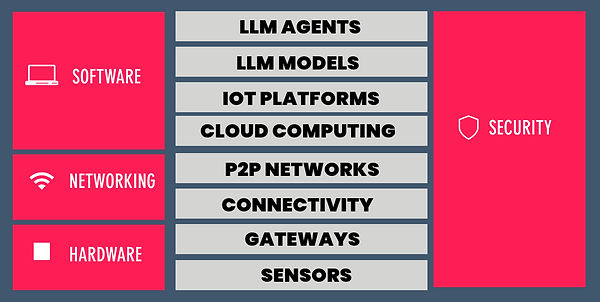
Successfully navigating the transition to near- autonomous, AI-agent-driven operations requires a comprehensive, value-driven approach to
technology adoption. Solutions should be scalable and aligned with long-term business objectives. Establishing strong organizational and technological foundations that support this vision is crucial for manufacturers looking to capture the technology’s full potential.
Our unique large language model based autonomy platform leverages customized generative AI models to create general-purpose robots capable of learning, adapting, and performing a wide range of tasks. By integrating large language models into robot and or machines control systems, we provide the flexibility to tackle complex, dynamic environments—bringing cutting-edge AI to the forefront of manufacturing and robotic. Implementing a composable deployment approach allows for incremental enhancements to operations, avoiding the traditional, rigid monolithic MES model. This flexibility supports a dynamic and responsive production strategy, keeping operations aligned with evolving business demands.
MANUFACTURING DATA FABRIC

Monkeypatched enables manufacturers to seamlessly connect data from every system—SCADA, PLCs, MES, ERP, IoT, and more—into a unified, intelligent framework.
Our Manufacturing Digital Thread creates a continuous flow of information across the product lifecycle, linking design, production, quality, and maintenance data into a single source of truth.
This interconnected structure:
-
Breaks down data silos between departments and systems
-
Provides actionable insights in real time
-
Empowers stakeholders to make faster, more confident decisions
-
Accelerates innovation by enabling rapid feedback loops from the factory floor to design and planning
By integrating your entire manufacturing ecosystem into one intelligent thread, Monkeypatched turns fragmented data into a strategic asset—driving efficiency, agility, and competitiveness.
RETRIEVAL AUGMENTED GENERATION

-
Structured: MES orders, ERP inventory, QMS NCs, historian stats, OEE, downtime logs.
-
Semi/Unstructured: SOPs, work instructions, maintenance logs, OEM manuals, PDFs, emails.
-
Streaming: SCADA/PLC tags, alarms, sensor telemetry (via EdgeX/Kafka/MQTT).
-
Graph context (Neo4j): assets → lines → plants, parts ↔ specs, failure modes ↔ remedies.
With RAG, our AI agents:Search across your connected systems (SCADA, MES, ERP, PLC logs, IoT sensors, CAD files, manuals, SOPs) in real timeRetrieve only the most relevant, up-to-date information for the task at handGenerate clear, context-aware responses that blend AI reasoning with accurate, domain-specific dataThis means your teams get:Precise troubleshooting guidance based on actual equipment historyInstant answers to operational queries without searching through multiple systemsActionable insights that reflect your plant’s current state, not outdated assumptionsBy combining the speed of AI with the accuracy of your own data, RAG transforms manufacturing decision-making—reducing downtime, improving quality, and enabling faster, smarter operations.
SUGRIV - INDUSTRIAL LLM

SUGRIV (Smart Unified Generative Reasoning for Industrial Value) is Monkeypatched’s purpose-built Large Language Model designed exclusively for manufacturing and industrial environments.Unlike general-purpose AI models
SUGRIV:Understands industrial terminology across sectors like automotive, aerospace, heavy machinery, and electronicsSpeaks the language of your operations—from SCADA tags to MES workflows, from CAD specs to PLC logicConnects directly to your plant’s digital thread, integrating live data from IoT sensors, ERP systems, quality reports, and more
Follows strict security and compliance protocols, ensuring your proprietary data stays private and protectedWhat SUGRIV delivers:Smarter troubleshooting with context from your actual machines and historyAutomated reporting that translates raw data into actionable insightsExpert-like recommendations for process improvements and predictive maintenance
Adaptive learning—it keeps getting better as it works with your data and workflowsWith SUGRIV, manufacturers move beyond generic AI to a domain-specialized intelligence engine that drives operational efficiency, innovation, and competitive advantage.
HARDWARE AND CONTROL SYSTEM INTEGRATIONS
Hardware & Edge Compute Services for Local LLM Deployments

We provide specialized hardware and edge computing solutions designed to run industrial Large Language Models (LLMs) directly on your factory floor—keeping your data secure, compliant, and lightning fast.Why Local LLMs?In manufacturing, milliseconds matter and data privacy is paramount. Running AI models on-premises eliminates dependency on cloud latency and ensures that sensitive operational data never leaves your facility.
Edge AI Appliances – Industrial-grade, GPU-powered servers optimized for inference workloads.
Ruggedized Edge Nodes – Designed to operate in challenging factory environments with high vibration, dust, and temperature variation.
On-Prem LLM Deployment – Fully containerized SUGRIV Industrial LLM setup for your specific manufacturing workflows.Low-Latency Decision Support – Sub-second response times for shop-floor AI agents, enabling real-time process optimization.
Hybrid AI Architecture – Combine local processing with selective cloud connectivity for large-scale retraining and updates.Hardware Sizing & Optimization – Tailored configurations from compact edge gateways to multi-GPU clusters.

Custom hardware development for electronic hardware requirements
We design and develop custom firmware for microcontrollers, sensors, and edge devices, enabling reliable and efficient control in industrial and IoT environments.
Our Expertise
-
Microcontroller Programming – STM32, PIC, AVR, ARM Cortex, ESP32, and more
-
Peripheral Integration – GPIO, I²C, SPI, UART, CAN, Modbus, and industrial protocols
-
Real-Time Systems – Development with FreeRTOS, Zephyr, or bare-metal programming
-
Hardware Optimization – Low power consumption, small memory footprint, high performance
-
IoT & Connectivity – Embedded networking with Wi-Fi, Bluetooth, LoRa, and cellular modules
-
Edge AI Integration – Deploying optimized AI/ML models directly on embedded hardware
AI ORGANISATIONAL TRANSFORMATION
.png)
Adopting AI is not just a technology upgrade—it’s an organizational evolution.
We guide companies through this transformation with structured changes that include:
-
Development of New AI-First Roles-Chief AI Officer / Head of AI Strategy
-
Oversees AI adoption roadmap and integration with business goals.
-
Training for AI Product Owners – Managers
-
Building an AI Governance Framework
-
Establish a cross-functional AI steering committee for continuous improvement.
-
Upskilling & Cultural ShiftTrain teams to work alongside AI, interpret AI-driven insights, and make AI-augmented decisions.
-
Encourage a data-driven mindset across all operational levels.
-
-
Define policies for data access, security, compliance, and ethical AI usage.